October 20, 2026
Process Intelligence explained
Most AI transformation mandates start with what to automate. Process intelligence answers the question that comes first: how does work actually happen today, and how could it work better?

Most AI transformation mandates start with the same question: what should we automate?
The problem is that most organizations don’t have a reliable answer. Teams know what their processes are supposed to look like, but not necessarily how work actually happens. They don’t know where bottlenecks occur, which steps rely on manual work, or where automation opportunities exist.
You can’t reimagine a process for an AI-native way of working from assumptions. You need data-driven insights that show how it works today, what it’s meant to achieve, and how it could work better. Process intelligence provides that baseline, using real process data to show teams what to improve, redesign, or automate.
What is process intelligence?
Process intelligence is the analysis of how business processes actually work, using business process data to identify bottlenecks, inefficiencies, variations, and opportunities for improvement or automation. Process intelligence tools give organizations an evidence-based view of work as it happens, complementing business intelligence with a deeper understanding of how processes actually run.
AI has expanded process intelligence from understanding how work happens to helping teams reason about how it could happen differently. With that deeper understanding, teams can rethink the process around the outcome it needs to achieve and determine where intelligent process automation or AI could improve how that outcome is achieved.
Process intelligence vs. adjacent categories
Process intelligence overlaps with process mining and robotic process automation (RPA), but they solve different problems.
Process mining
Process mining uses event logs from business systems to reconstruct how a process actually runs.
By analyzing process data from connected ERP, CRM, and other business systems, process mining can:
- Map the paths work takes through those systems.
- Identify bottlenecks, delays, variations, and unusually long processing times.
- Compare actual process performance against an expected process model.
Its view depends on the event logs available. Work that happens in email, spreadsheets, chat, or systems without accessible logs may not appear in the analysis.
Robotic process automation (RPA)
Robotic process automation uses software bots to carry out predefined, repetitive tasks. (For how this fits into the broader shift toward AI-native discovery, see how automation has evolved through five waves.)
Once a workflow is understood and its rules are defined, RPA can:
- Automate repetitive steps such as data entry and transferring information between systems.
- Reduce manual work through workflow automation in stable, predictable processes.
- Execute routine processes faster and more consistently.
RPA generally comes later in the automation journey. Teams need to understand the workflow and decide what should be automated before they can tell a bot how to execute it.
Process intelligence
Process intelligence builds an evidence-based understanding of how work gets done so teams can decide what to improve, redesign, or automate.
A complete view of how work happens can reveal:
- Processes and their variations across the applications people actually use.
- The context and human judgment behind individual steps and decisions.
- Bottlenecks, inefficiencies, manual work, and automation opportunities.
- Opportunities for intelligent automation, process optimization, and AI agents.
Process intelligence sits earlier in the decision-making process. It helps teams establish what should change and why before deciding how automation should work or which technology should execute it.
Why process intelligence matters for AI transformation
As digital transformation increasingly centers on AI, leaders need more than a list of repetitive tasks to automate. Leaders need to understand what work is being done, what outcome each process is trying to achieve, and whether AI creates a better way to achieve it.
Process intelligence provides the baseline for those decisions. With an accurate view of how work happens today, teams can:
- Identify processes where automation or AI agents could deliver meaningful value.
- Find bottlenecks, manual work, and unnecessary steps that should be removed rather than automated.
- Separate repetitive work from decisions that require context or human judgment.
- Redesign workflows around the outcome they need to achieve instead of replicating the existing process with new technology.
- Prioritize automation opportunities using operational data rather than assumptions.
That discipline is increasingly important as enterprise AI moves toward agentic AI. Gartner predicts that more than 40% of agentic AI projects will be canceled by the end of 2027, citing escalating costs, unclear business value, and inadequate risk controls among the reasons.
Process intelligence gives Chief AI Officers (CAIOs) and AI transformation leaders a clearer starting point: understand the work, decide what should change, then determine where AI and automation belong.
What good process intelligence looks like
Effective process intelligence goes beyond mapping a workflow. It should give teams an accurate understanding of how work happens, why it happens that way, how it changes over time, and what to do next.
That depth of understanding becomes more important as AI adoption outpaces measurable results. Nearly 90% of companies have invested in AI, according to McKinsey, yet fewer than 40% report measurable gains. Its research suggests one reason may be that organizations are applying AI to discrete tasks rather than redesigning entire workflows, and argues that capturing larger productivity gains will require reimagining workflows around AI.
Discovery
Process discovery establishes the baseline: what processes exist, how they actually run, and what each one is trying to achieve.
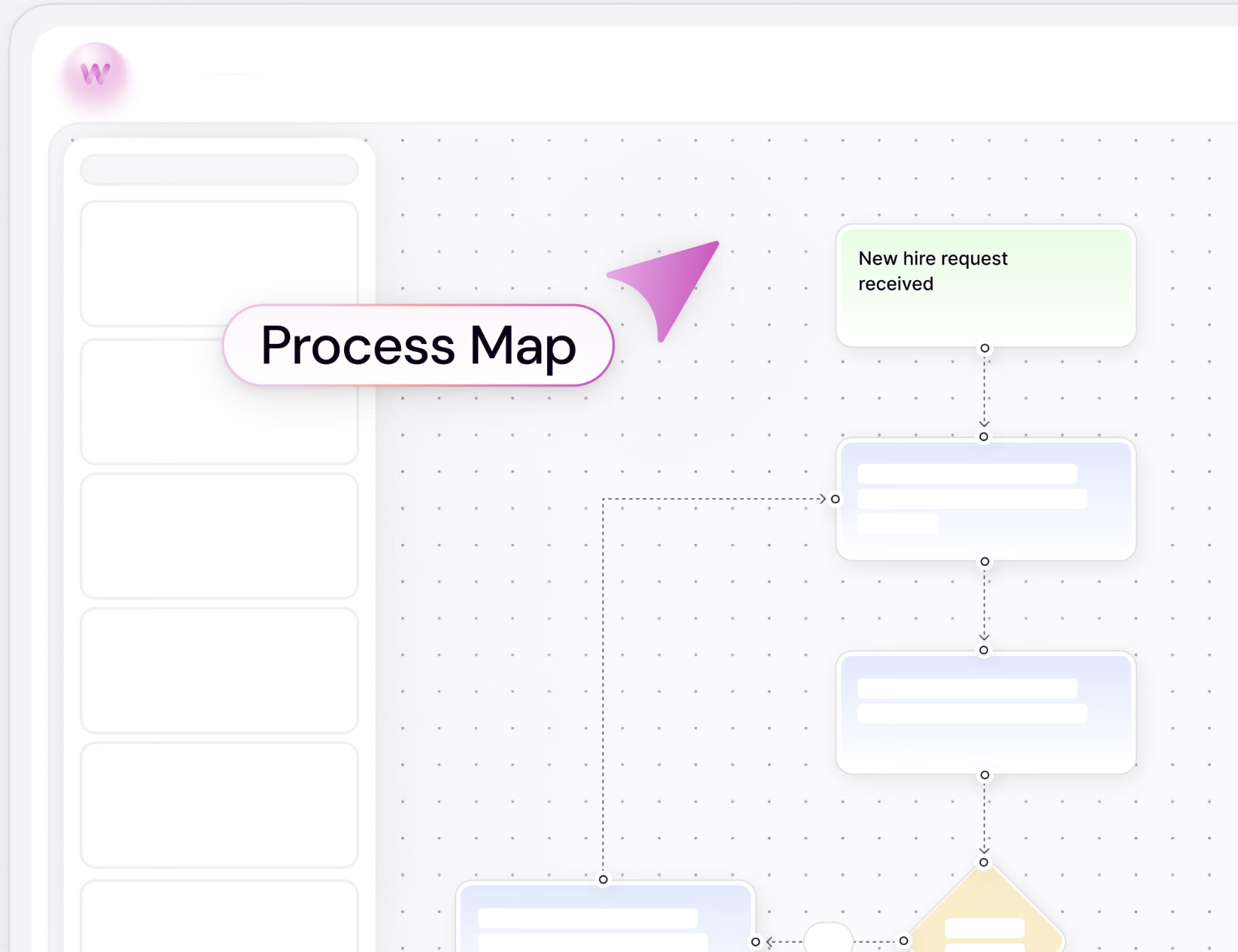
That means capturing real workflows across teams and applications, including process variations, manual workarounds, bottlenecks, and judgment calls that rarely appear in process maps or standard operating procedures (SOPs).
Semantic understanding
Process intelligence needs to understand what people are doing and why, rather than simply recording clicks, timestamps, or system events.
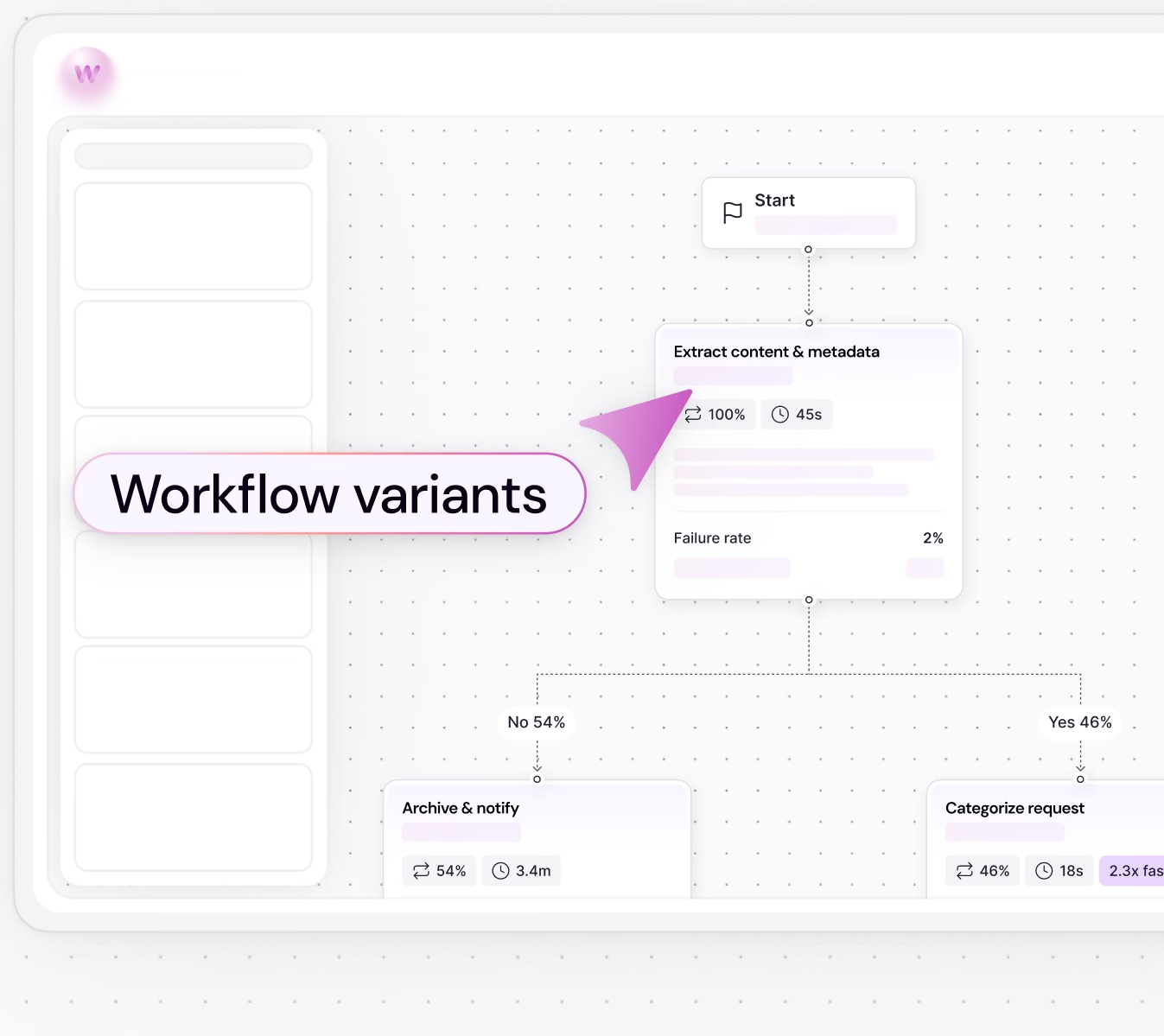
Artificial intelligence and machine learning give process intelligence the scalability to analyze far more workflows and variations than manual discovery methods. AI can interpret the context around an action, recognize patterns across different ways of completing the same work, and distinguish repetitive steps from decisions that depend on human judgment. The result is a richer process model than event logs or activity tracking alone can provide.
Adaptability
Processes change as teams, systems, policies, and ways of working change. Process intelligence should keep the organization’s understanding of its processes current as the work evolves.
Refreshing process data over time helps teams spot new bottlenecks, track changes in process performance, and identify new opportunities for continuous process improvement and automation without relying on outdated documentation.
Actionability
Process intelligence should turn process analysis into specific decisions and next steps.
That could mean updating an SOP, removing an unnecessary step, prioritizing an automation opportunity, redesigning a workflow, or producing the requirements needed to build an automation or AI agent.
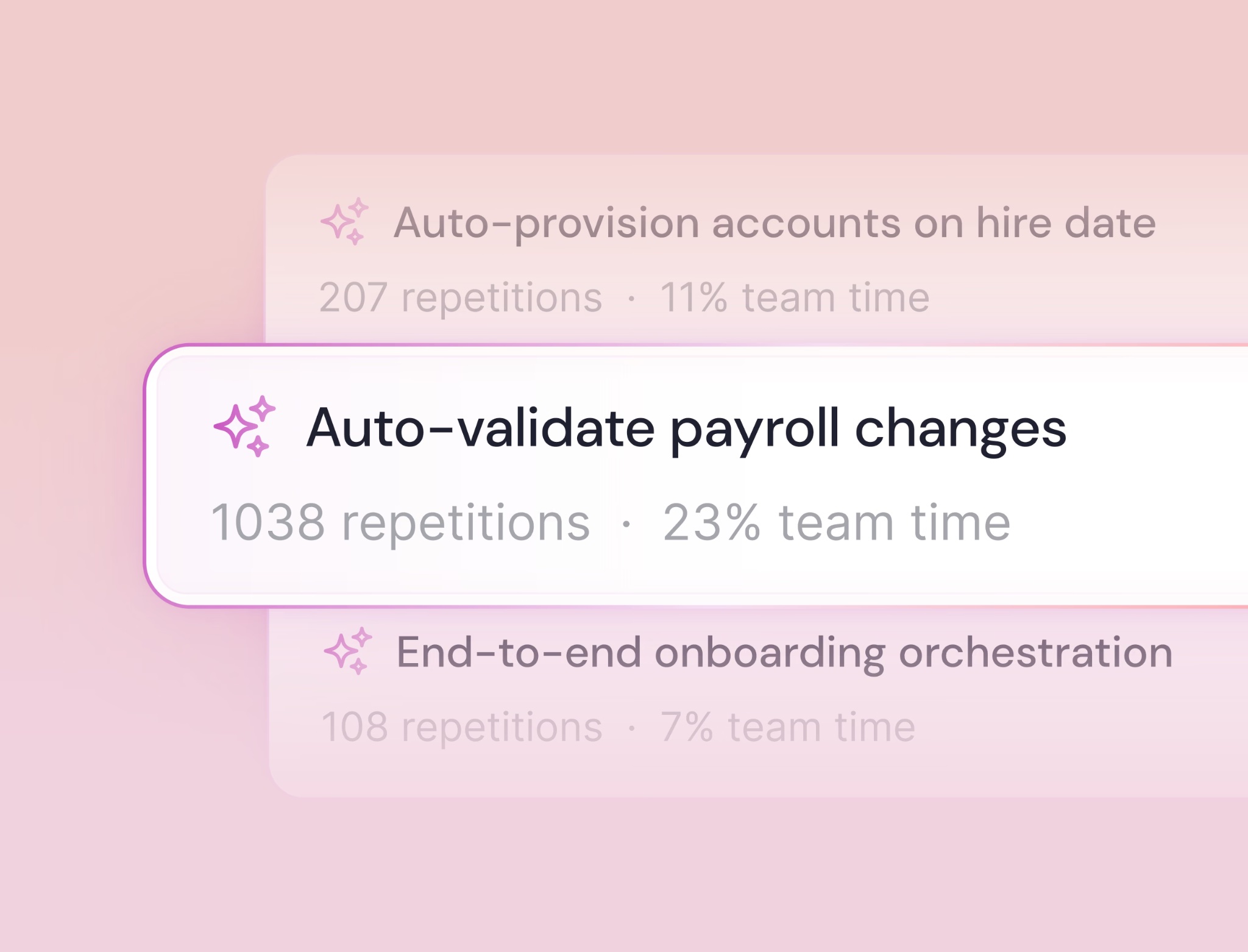
Once you know what should change, the next question is how much of the redesigned workflow should be automated. Worktrace AI’s framework for scoring how automatable a workflow actually is provides a systematic way to make that decision instead of relying on gut feel.
How Worktrace AI approaches process intelligence
Worktrace AI starts with a two-week discovery snapshot. A lightweight desktop app observes how work happens across every application a team uses, with no system integrations required. Observation happens at the team level only: Worktrace doesn't track individual productivity or keystrokes, redacts PII on-device and in the cloud, and runs on an allowlist/denylist basis with opt-in consent.
Because Worktrace AI is fully AI-powered, it can analyze work at scale rather than sampling a handful of processes. It maps every process, workflow, and variation captured during the discovery period, then uses AI to understand the context and intent behind what happens on screen.
That turns observed work into practical outputs teams can use:
- Process maps showing how work actually happens.
- Generated SOPs based on observed workflows.
- Process analysis highlighting bottlenecks, variations, and opportunities for improvement.
- Automation and AI agent blueprints that provide the requirements needed to build.
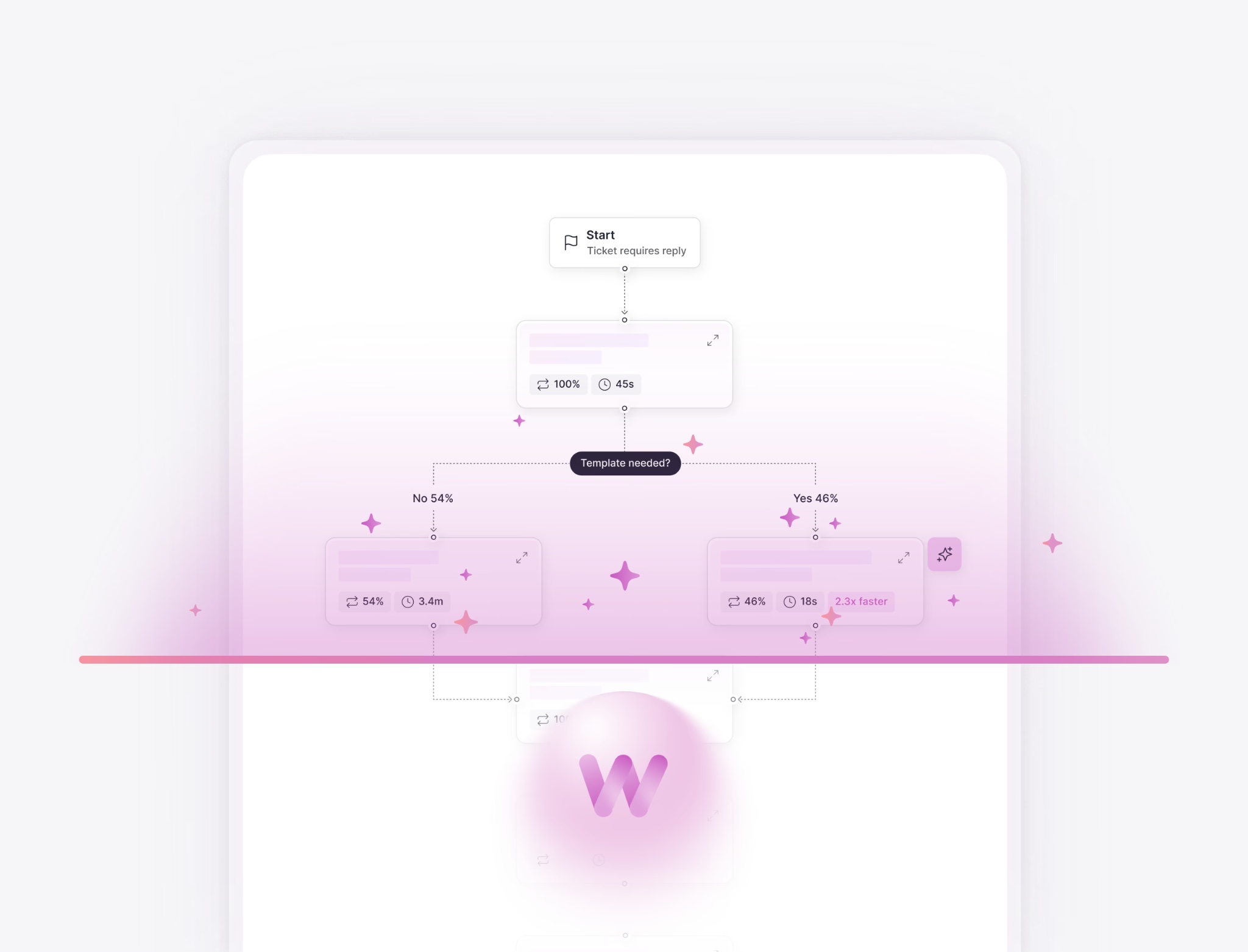
The process data also remains available through MCP (Model Context Protocol), so teams can keep using AI to query and analyze what the two-week snapshot captured, even after the discovery window closes.
Delhivery, India's largest integrated third-party logistics provider, used Worktrace AI across roughly 20 teams, including security, supply chain, and operations. Within weeks, Worktrace AI surfaced 8 high-priority automation blueprints, alongside process improvements that didn't require AI.
The same approach can be applied across finance, IT, operations, customer support, and other functions covered in Worktrace AI’s use cases.
Turn process intelligence into action
Process intelligence should change what you do next: what gets automated, what gets redesigned, and what gets left alone. By building an evidence-based picture of how work actually happens, AI leaders can make those decisions based on process data rather than assumptions.
For AI transformation, that means starting with the work itself: understand the processes you have, the outcomes they need to achieve, and where AI or automation can genuinely improve them.
See what that looks like across your own organization. Request a Worktrace AI demo to get a two-week discovery snapshot of how work actually happens, with no integrations required.
FAQs about process intelligence
What is process intelligence used for?
Process intelligence is used to understand how business processes actually work so teams can identify opportunities to improve, redesign, or automate them. It provides an evidence-based baseline for process optimization, automation, operational excellence, and AI transformation, helping teams prioritize opportunities using real process data rather than assumptions.
Is process intelligence the same as process mining?
No. Process intelligence and process mining are related, but they use different approaches to understanding work. Process mining reconstructs processes from event logs generated by connected systems. Process intelligence can capture work across applications and interpret the context and intent behind individual steps, including activity that may not appear in a system event log.
How has AI changed process intelligence?
AI has made it possible to understand processes in greater depth and at a much larger scale. Earlier approaches relied heavily on interviews, shadowing, manual process mapping, or click- and log-based tracking. AI-powered approaches can add semantic understanding to that analysis, helping teams understand not only what happened within a process, but the context around how the work was performed.
How long does it take to see results from process intelligence?
The time it takes to see results from process intelligence depends on the discovery approach and the scope of the analysis. Worktrace AI uses a two-week discovery snapshot to establish an evidence-based baseline of how work happens across a team, with early insights often available within days.
Read more

October 21, 2026
Task mining: complete guide
Task mining is back on the agenda as a foundational input for AI transformation. Here's how it works, how it differs from process mining, and where it falls short.
Agents you'll actually use
Worktrace discovery maps exactly how your team works and finds the most repetitive work. Then it builds Al agents that do that work.
We'll get in touch with you shortly.





of enterprise work is automatable